How To Prevent And Manage Exercise-related Neck Pain Or Stiffness?
Do you often wake up in the morning with a stiff neck? This is a common problem for many people, but fortunately, there are several ways to treat it. A stiff neck is usually caused by sleeping in an awkward position or keeping your head in one position for too long. It can be painful and uncomfortable, making it difficult to move your head. In this article, we will provide tips on how to treat a stiff neck after sleeping.
Details
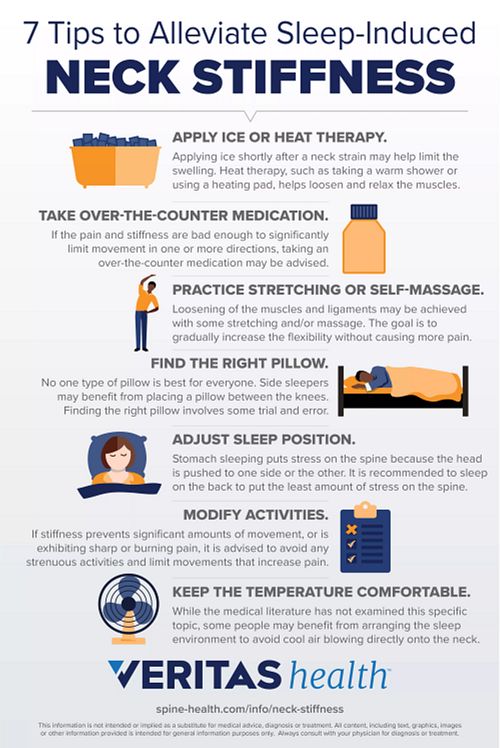
The first step to treating a stiff neck is to identify the cause. As mentioned above, sleeping in an awkward position or keeping your head in one position for too long can cause a stiff neck. If you are suffering from this problem, try changing your sleeping position. Sleeping on your back with a pillow under your knees or on your side with a pillow between your knees can help relieve the pressure on your neck.
Another way to treat a stiff neck is to apply heat or cold to the affected area. You can use a heating pad or a warm towel to increase blood flow and relax the muscles in your neck. On the other hand, you can also use an ice pack or a cold compress to reduce inflammation and numb the pain. It is recommended to apply heat or cold for 20 minutes at a time, several times a day.
Gentle stretching exercises can also help relieve a stiff neck. Slowly rotate your head in a circular motion, first clockwise, and then counterclockwise. You can also tilt your head to the left and hold for 15 seconds, and then tilt it to the right and hold for 15 seconds. Repeat this exercise several times a day.
Massaging your neck can also help loosen the muscles and relieve stiffness. Apply gentle pressure to the affected area with your fingers, and gently knead the muscles. You can also use a massage ball or a foam roller to roll along the sides of your neck. However, be careful not to apply too much pressure, as this can cause more pain.
Over-the-counter pain relievers can also help reduce the pain and inflammation associated with a stiff neck. However, it is recommended to use them sparingly, as prolonged use can lead to side effects and dependence.
If your stiff neck is accompanied by other symptoms such as fever, headache, dizziness, or numbness, it is important to seek medical attention immediately. These symptoms may indicate a more serious underlying problem, such as an infection, a nerve damage, or a spinal cord injury.
Tips
Here are some additional tips to prevent a stiff neck:
- Practice good posture
- Avoid staying in the same position for too long
- Exercise regularly to strengthen your neck muscles
- Use a supportive pillow while sleeping
- Avoid carrying heavy bags or purses on one side of your body
FAQ
What is the best sleeping position for a stiff neck?
The best sleeping position for a stiff neck is on your back or on your side with a pillow between your knees.
How long does it take for a stiff neck to go away?
A stiff neck usually goes away within a few days or a week. However, the recovery time may vary depending on the severity of the condition.
When should I see a doctor for a stiff neck?
You should see a doctor if your stiff neck is accompanied by other symptoms such as fever, headache, dizziness, or numbness, or if it does not go away within a week.
Can stress cause a stiff neck?
Yes, stress can cause muscle tension and lead to a stiff neck. It is important to manage your stress levels to prevent this problem.
Is it okay to exercise with a stiff neck?
You can exercise with a stiff neck, but you should avoid strenuous activities that may worsen the condition. Stick to gentle stretching exercises and low-impact activities such as walking or swimming.
In conclusion, a stiff neck after sleeping can be a painful and uncomfortable condition, but it can be treated with several home remedies. If your symptoms persist or worsen, it is important to seek medical attention to rule out any underlying problems.


Post a Comment for "How To Prevent And Manage Exercise-related Neck Pain Or Stiffness?"